
 info@givemetrees.org
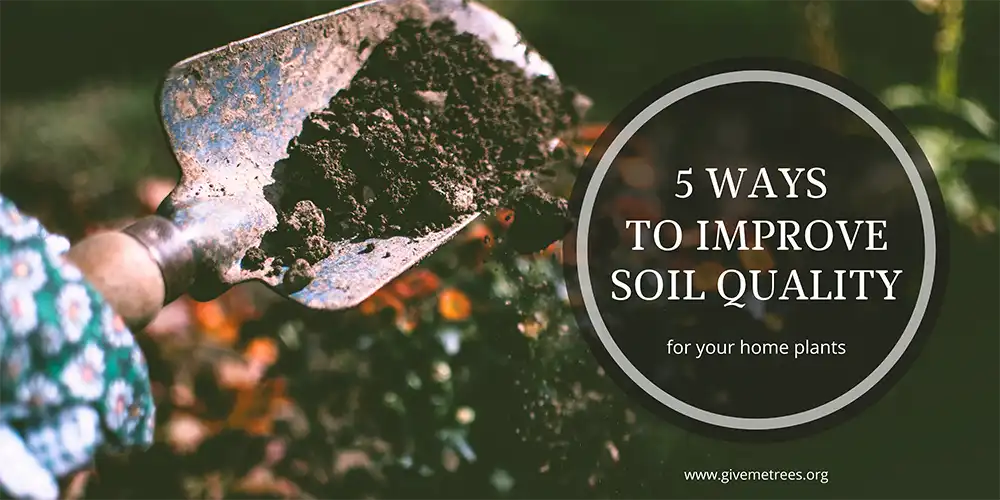
How to Improve Soil Quality for Your Home Plants
06 May, 2026
3 min read
Healthy soil is essential for plant growth and overall ecosystem health. It is a complex mixture of minerals, organic matter, water, air, and microorganisms that work together to support plant growth and nutrient cycling. If your plants are not growing well and dying, then there might be a possibility that the health of the soil is poor.
Healthy soil contains a diverse community of microorganisms, including bacteria, fungi, and protozoa, that help break down organic matter and release nutrients for plants to use. Additionally, healthy soil has a good structure, allowing for water to drain through easily while still retaining moisture for plants to access.
Improving soil health and quality is crucial for sustainable agriculture and a healthy environment. One should take care of the soil health frequently and take measures to improve the quality of soil in the gardens, lawns, and elsewhere.
Here are some ways to improve soil health in the long term that will benefit your plants.
5 Ways to Improve the Quality of Soil
1. Use natural garden soil: The first and most important tip is to use garden soil in your pots. Visit any garden near your house where there are trees, plants, grass, and vegetation. Use the soil in that garden and add it to your plant pots at home. Usually, the top layer of soil in the gardens is naturally very rich in nutrients. You don't need to purchase it from any nursery.
2. Use organic matter: Adding cow dung compost, leaf mold compost, vermicompost, or other organic materials to the soil can improve its structure, increase water-holding capacity and provide essential nutrients to plants. Additionally, you can add slow-release fertilizers to provide your plants with the nutrients they need over time. This is the best natural way to increase the quality of soil at home.
3. Add Humus: The fastest way to improve soil health is to add humus. Humus is the dark organic matter in soil that is formed by the decomposition of plant and animal matter. It is rich in nutrients and retains moisture in the soil.
4. Reduce tillage: Excessive tillage can disrupt soil structure and decrease soil organic matter. Reducing tillage can help improve soil health and reduce erosion. Tillage refers to the manipulation of the soil into a desired condition by mechanical means. This is not so good for the health of the soil and causes fungal diseases. Tilling of soil disrupts its structure and accelerates surface runoff and soil erosion.
5. Use crop residue and dry grass: Do mulching with grass and crop residues on the soil surface to improve the soil quality. This will help protect the soil from erosion and will increase the moisture & water retention capacity.
Extra Tip: Another important tip to improve soil quality and health is to regularly check the pH level of your soil and adjust it as necessary.
By implementing these practices you can improve the soil quality and make it healthy. You have to make sure your plants are growing and thriving in healthy soil.
Improving the quality of soil in pots is important for the health of your plants. This will help to improve the soil structure, increase water retention, and provide nutrients to your plants.
Latest Posts

10 Common Butterflies of India
India is home to a diverse range of butterfly species, with over 1,500 known species....
Tree Planting Method: Simple Steps to Plant a Tree
Planting a tree is a wonderful way to help the environment and beautify your surroundings....

Monoculture Tree Plantation Method
Monoculture tree plantation refers to the practice of growing only one species of tree in...

Difference between afforestation and reforestation
Afforestation and reforestation are two important terms that describe different types of forest restoration. Both...

What is Afforestation?
Afforestation is the process of planting trees on a barren land or a place where...
Latest Blogs
10 Common Butterflies of India
India is home to a diverse range of butterfly species, with over 1,500 known species. Here are 10 of the most common butterflies found in India.
Read More
Tree Planting Method: Simple Steps to Plant a Tree
Planting a tree is a wonderful way to help the environment and beautify your surroundings. Proper tree planting method ensures that trees grow strong and healthy, making them more resistant to diseases and pests, and more resilient to harsh weather conditions.
Read More
Monoculture Tree Plantation Method
Monoculture tree plantation refers to the practice of growing only one species of tree in a particular area. The monoculture practice of planting trees has both positive and negative consequences. Let's understand both of them.
Read More
Difference between afforestation and reforestation
Afforestation and reforestation are two important terms that describe different types of forest restoration. Both concepts involve the planting of trees on land but they are not the same fundamentally.
Read More
What is Afforestation?
Afforestation is the process of planting trees on a barren land or a place where there was no forest ever. This practice is often used to combat deforestation, which is the loss of trees due to human activities such as logging and land clearance for urbanization.
Read More